August 30, 2026
How to Stop Overthinking at Night and Fall Asleep
The day was loud enough to keep the worries in the background. Then the lights go out, the phone is down, and your brain starts a meeting with itself.
Tomorrow's list. The thing you said. The thing you did not say. A replay of a conversation that ended hours ago. You are tired. You are also, suddenly, extremely awake.
This is one of the most common reasons people lie in bed exhausted and still cannot sleep. It is not that you secretly have more energy. It is that quiet removes the competition, and thinking rushes in to fill the space.
You do not have to win an argument with your own mind at 11:47. You need a way to close the day before you get into bed — and a plan for what to do if you are already there, staring at the ceiling.
Affiliate disclosure: We may earn a commission if you purchase through links on this page, at no additional cost to you. Read the full disclosure.
Why your brain gets busy when everything becomes quiet
During the day there is always something else to look at: work, messages, traffic, other people. The mind can park a worry and pick it up later. At night there is nothing else to look at, so the unfinished items finally get a slot.
That is not a character flaw. It is how attention works. Stress and worrying are well-established contributors to insomnia, and worrying specifically about whether you will sleep can make the loop tighter: you notice you are thinking, you panic that thinking will ruin the night, your heart rate climbs, and now you really are awake.
The bed has started to mean alertness. That pairing is the problem, not the fact that you have thoughts. Everybody has thoughts. The difference is whether they get a dedicated meeting in the dark or a two-minute parking spot before you lie down.
If this is the main reason you cannot drop off even when you are tired, it sits next to the same pattern we wrote about in Why Can't I Sleep Even When I'm Tired?. The rest of this page is the specific version: the brain that will not shut up once the room is quiet.
Stop trying to “force” sleep
Trying to sleep is not the same as being ready to sleep. The more you monitor it — am I sleepy yet, why am I still awake, how many hours are left — the more the nervous system treats bedtime like a performance.
Clock-watching is a reliable way to keep the meeting going. Once you know it is 12:14, the night becomes a countdown. Turn the clock away if you can. The job is to get out of the loop, not to audit how badly the night is going.
Forcing it also shows up as remaining in bed, angry, for an hour. That trains the mattress to mean struggle. If you have been awake for a stretch and you know you are spinning, get up. Low light, something dull, back to bed when sleepy shows up. That is the same stimulus-control idea used in insomnia care, and it is free.
For a wider list of wind-down moves — light, caffeine, the room, a short off-ramp — see How to Fall Asleep Fast: 12 Practical Ways to Wind Down and Sleep Better. This page is the overthinking slice of that problem.
Write tomorrow down before bed
A lot of nighttime overthinking is unfinished tomorrow. The brain treats an open loop as a job: replay the meeting, draft the email, remember the form, re-run the argument. Two minutes with a pen is often enough to park it until morning.
Keep a pad during the wind-down, not on the pillow. Write tomorrow's list, the one thing you are chewing on, and anything you are afraid you will forget. Ugly handwriting counts. The point is to get it out of working memory, not to produce a beautiful planner spread.
If the loop is a worry, not a to-do, still write it. One sentence: what it is, and what you will do about it tomorrow — even if the action is “decide at 9 a.m.” or “call them back.” The brain often lets go when it trusts the item is captured.
Do this before you get into bed. Doing it at 1 a.m. in the dark is when the list grows and the clock becomes the enemy.
Create a mental shutdown routine
You cannot sprint from Slack into unconsciousness. Give the brain a clear off-ramp: the same short sequence most nights, starting at a clock time rather than “when I feel ready.” Feeling ready is often another 40 minutes of thinking.
Pick three things you will actually repeat. A shower, washing your face, a paper book, laying out tomorrow's clothes, the two-minute list. Skip the elaborate twelve-step routine you will abandon on Thursday. Boring and repeatable beats impressive and rare.
Dim the house during that window. Overhead lights at full blast tell your brain it is still daytime. If you live with other people, this is also when you stop starting new conversations about money, the calendar, or the fight from lunch.
After a week of the same sequence, you will notice the yawn arriving earlier. That is the point of a shutdown routine: the body learns that this stretch means the day is closed.
Reduce stimulation before bedtime
The issue is not only blue light. It is novelty — one more scroll, one more argument, one more thing to solve. If the phone is in your hand, your brain is still at work. Night mode helps a little. It does not stop a news alert from lighting up your nervous system at 10:47.
Park the phone before the off-ramp starts, not after you are already in bed “for a minute.” Charge it across the room or in another room. If you need it as an alarm, leave it face down, on Do Not Disturb, off the mattress.
Bright screens, work tabs, and “just checking” email are daytime activities. They belong before the shutdown, not inside it. The NHLBI recommends reducing bright screen exposure before bed and using that period for quieter activities. You do not need a perfect digital sunset. You need fewer new problems in the last half hour.
Breathing and relaxation techniques
When the meeting has already started, a body-first move can be more useful than another thought. Slow breathing, a short stretch on the floor, or a simple muscle-release from the jaw down gives the nervous system something to do besides rehearse.
You are not trying to empty the mind. You are giving attention a dull, repeatable object: the breath, the feel of the sheet, a count. If the thought comes back, notice it, return to the object. That is practice, not a test you can fail.
A short evening breathing routine is one of the sleep-support options we cover if you want a structured version of this — not a cure for insomnia, and not a substitute for the shutdown and the list. If the basics are missing, a technique will not out-vote a bright phone and an unwritten tomorrow.
What to do if you've been lying awake
If you are already in bed and the loop is running, do not stay there arguing with the pillow. Get up. Keep the lights low. Do something dull: a paper book you have already read, a few stretches, folding laundry you do not care about. Go back when sleepy shows up, not when you have “served your time.”
Do not turn on a bright kitchen. Do not open the feed, the news, or a work tab. Those reward the waking brain. Boredom is the feature.
The first nights you may get up more than once. That still beats two hours of silent thinking in the dark, and it usually shortens over a week if you keep the rest of this list in play — especially the list before bed and a stable wake time the next morning.
Protect the wake-up even after a bad night. A long lie-in often steals the next evening and sets up another night of overthinking.
When nighttime worrying is more than an occasional sleep problem
An occasional busy-brain night is a rough night. Repeated overthinking that lasts weeks, steals your concentration, or comes with a rising panic every time you get into bed is in a different category.
Chronic insomnia is generally defined as trouble falling asleep, staying asleep, or getting restful sleep at least three nights a week for three months or longer, despite having the chance to sleep. That is worth a proper conversation, not another round of guessing.
If the worry is not only about sleep — if it is constant, if it is getting worse, if it is tied to depression, panic, or a sense that you cannot stop — that belongs with a healthcare professional. A shutdown routine can still help a noisy night. It is not treatment for an anxiety disorder.
Persistent daytime sleepiness after what should have been enough hours in bed can also have causes beyond “I should try harder to switch off.” Get it checked if the basics have had a fair run and the night is still falling apart.
Sleep-support approaches worth exploring
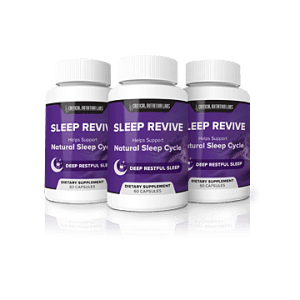
Habits come first: close the day on paper, dim the last half hour, put the phone out of reach, and get up if you are spinning. If those are already in place and you still want one more input, there are two useful shapes: a short evening practice, or a bedtime capsule.
Neither is a treatment for insomnia or a substitute for talking with a clinician if nights have been rough for a long time. They should not be stacked on top of a 10 p.m. espresso and a bright phone.
If you want to see the sleep-support options we currently cover in one place: